


For farmers in Antigua and Barbuda, water is everything. Each dry season brings cracked soil, withering crops, and the constant fear of losing their livelihood. But a new project in Jennings is offering fresh hope.
On Monday, officials launched a pilot solar-powered desalination system under the FAO’s Technical Cooperation Programme. The unit, called the Nanophotonics Enhanced Direct Solar Membrane Distillation (NESMD) system, was developed with the University of Texas at El Paso and installed at APUA Well Pump No. 8 in Blubber Valley.

The system runs entirely on solar power and can turn brackish water into irrigation supplies. Each day, it produces two cubic meters of fresh, low-salinity water for crops like tomatoes, and another two cubic meters of concentrate water suitable for tougher crops such as sweet potatoes.
“This project is important because it gives farmers access to water when they otherwise would have none,” said Brent George, Projects Coordinator at the Ministry of Agriculture. “It also reduces pressure on our freshwater resources, so farmers across the country can benefit.”
The pilot was designed with the expertise of Julius Pohjola, CEO of Solar Water Solutions, a Finnish company specializing in clean, off-grid water technologies. Pohjola has worked in Antigua before, overseeing successful solar desalination projects in Lightfoot and Christian Valley. Those earlier efforts proved that the technology can work well under Caribbean conditions.
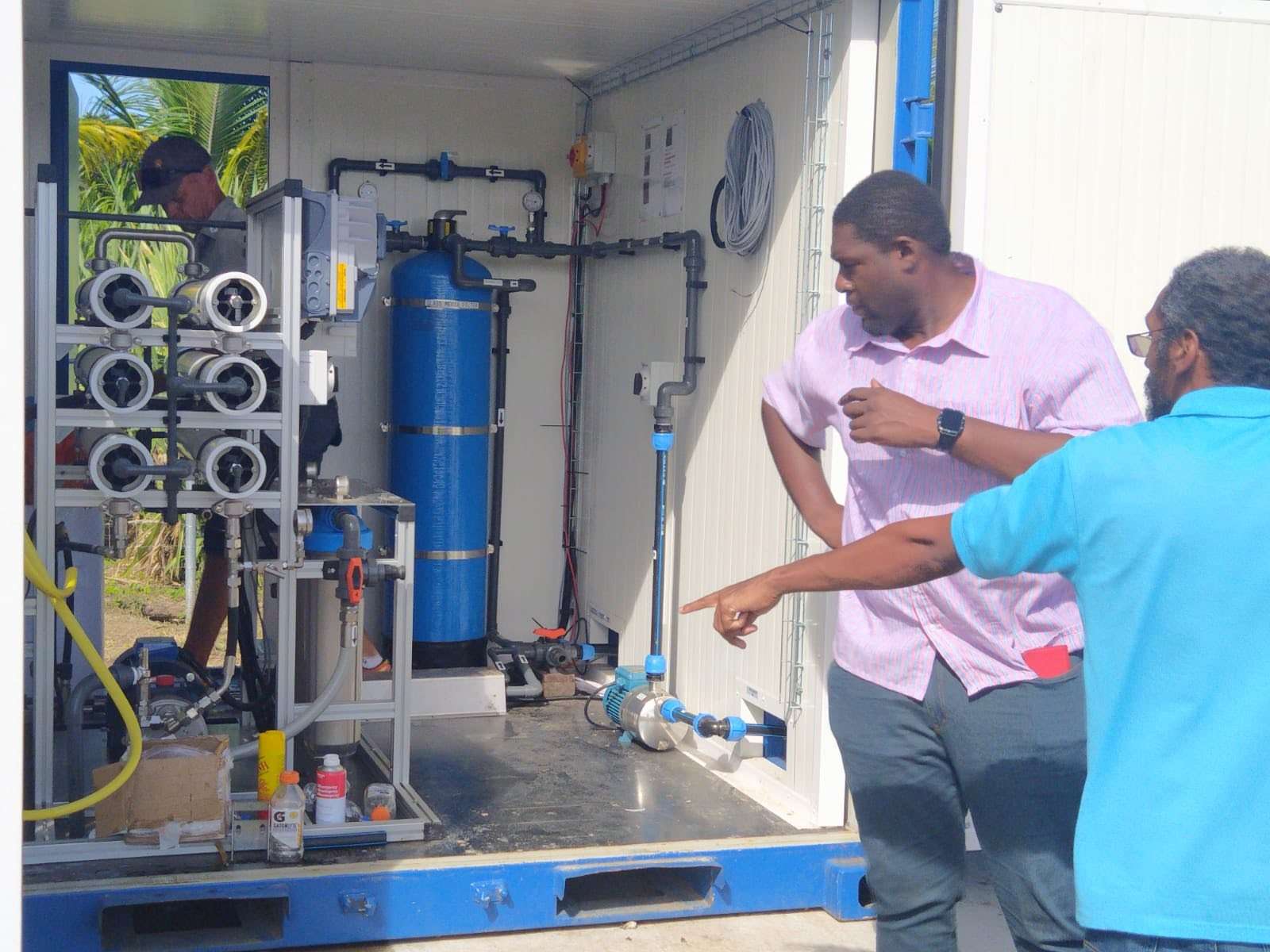
At the launch, Pohjola stressed the system’s simplicity: it needs little maintenance, creates no waste, and relies only on sunlight. For farmers, that means something rare — reliability.
FAO Project Coordinator Luke Nedd said the initiative is about more than technology. “This is about building resilience,” he explained. “Even in times of drought, farmers can keep producing and keep feeding the nation.”
The pilot will be closely monitored to track water quality, crop yields, and cost-effectiveness. If successful, officials hope to expand the program across Antigua and Barbuda with the support of government, private partners, and climate funding.
For now, the soft hum of the solar-powered unit in Jennings carries a message of reassurance: in the fight against drought and climate stress, Antigua and Barbuda’s farmers are not powerless.