

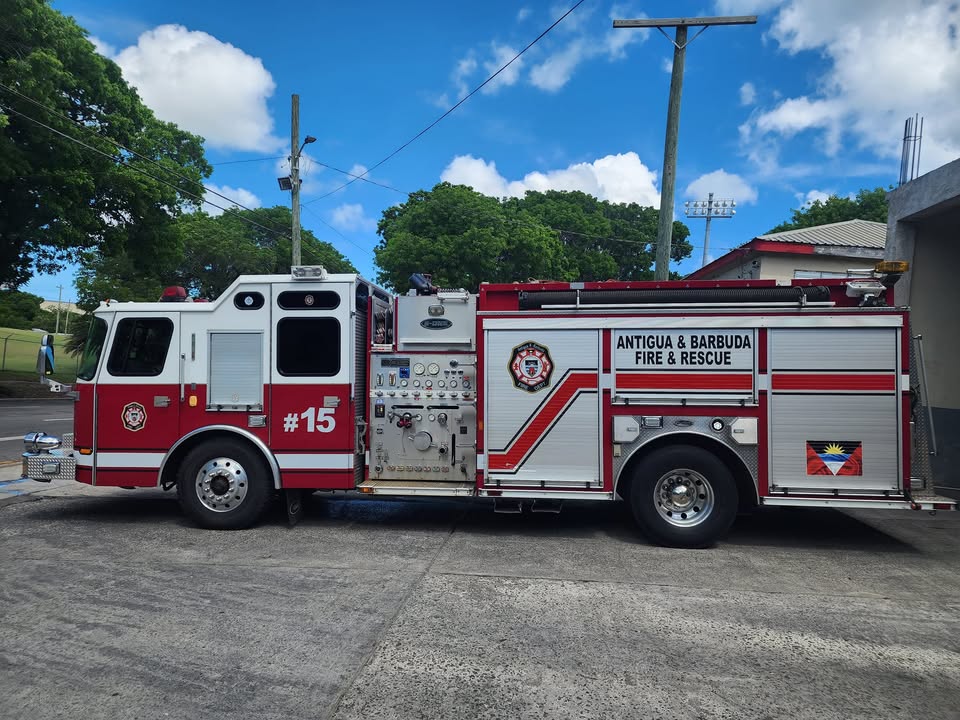
Despite public concerns about structural fires, Antigua and Barbuda has achieved a notable 16 percent reduction in fire-related emergency calls during the first half of 2025, according to Inspector Evette Henry, second-in-command of the Fire Prevention Unit within the Royal Police Force of Antigua and Barbuda’s Fire Service.
“Up to June 30th this year, we had 170 calls, and for last year, for the same period, we had 203 calls, which is a reduction of 33 calls, about 16 percent,” she said.

This positive trend coincides with intensified prevention efforts, including educational programs in primary schools, safety training sessions at hotels and other organizations, and increased radio outreach. Henry credits these proactive measures with contributing to the decline in fire incidents.
Fire prevention begins with education, particularly for children whose natural curiosity about fire poses significant risks. Henry stresses the critical importance of keeping ignition sources away from young hands and establishing clear safety rules.
“They have to educate their children about not playing with matches, lighters, candles, or any kind of ignition sources,” she warned. “Children are inquisitive; they will take up the matches and the candles and the lighters. They will go under the bed, try to light them because, you know, fire looks nice, right?”
Parents should store all ignition sources out of the reach of children and create clear boundaries around potential fire hazards throughout the home.
Kitchen fires pose one of the most serious threats to home safety, and Henry recommends regular cleaning of cooking surfaces to prevent grease build-up and establishing a three-foot safety zone around stoves that children cannot enter.
“We have to ensure that we clean our stoves, grills, or anything that we use for cooking regularly because we don’t want buildup of grease, which can cause grease fire,” she explained. “And we have to enforce a kids-free zone around the stove as well.”
When grease fires occur, Henry provided life-saving advice that contradicts many people’s instincts. “If you’re frying, and you have a fire, what you don’t want to do is to throw water on that type of fire. You don’t want to throw the frying pan out of the window, or the door as well. The curtains might get caught on fire,” she cautioned.
Instead, she recommends keeping a lid nearby that can completely cover the frying pan and cut off oxygen to extinguish the flames.
Electrical fires present particular challenges in homes where residents may not have consistent power access. Henry warns against overloading circuits by daisy-chaining multiple extension cords together.
“Sometimes we buy some extension cords, and then we plug four things into them. Then we buy another electrical cord, and we plug that electrical cord into another cord, and we overload our electrical circuit, which can cause arcing, and can cause a fire,” she explained.
Running cords under rugs or through doorways creates additional dangers, as constant pressure can cause dangerous arcing that leads to fires.
For residents using traditional coal pots, Henry emphasizes that safety principles remain the same. “If you use coal pots, you still have to exercise the same caution, and force the kids to zone around the coal pot. When you have your coal pot lit, you don’t leave it unattended,” she advised.
She specifically warned against using gasoline to light coal pots and stressed keeping flammable materials away from cooking areas.
While celebrating the current reduction in fire calls, Henry maintains that fire safety requires community-wide participation. “Fire prevention and safety is everybody’s business, she said. “We all need to play a part in fire prevention and safety. And if everybody plays their part, we can have a safer Antigua and Barbuda.” The Fire Prevention Unit plans to expand its public education programme through radio and television campaigns. “Follow the tips that we send out, and we’re going to send out more tips on the radio and the television. And so, if everybody plays their part, it will be better for Antigua and Barbuda,” Inspector Henry advised.