

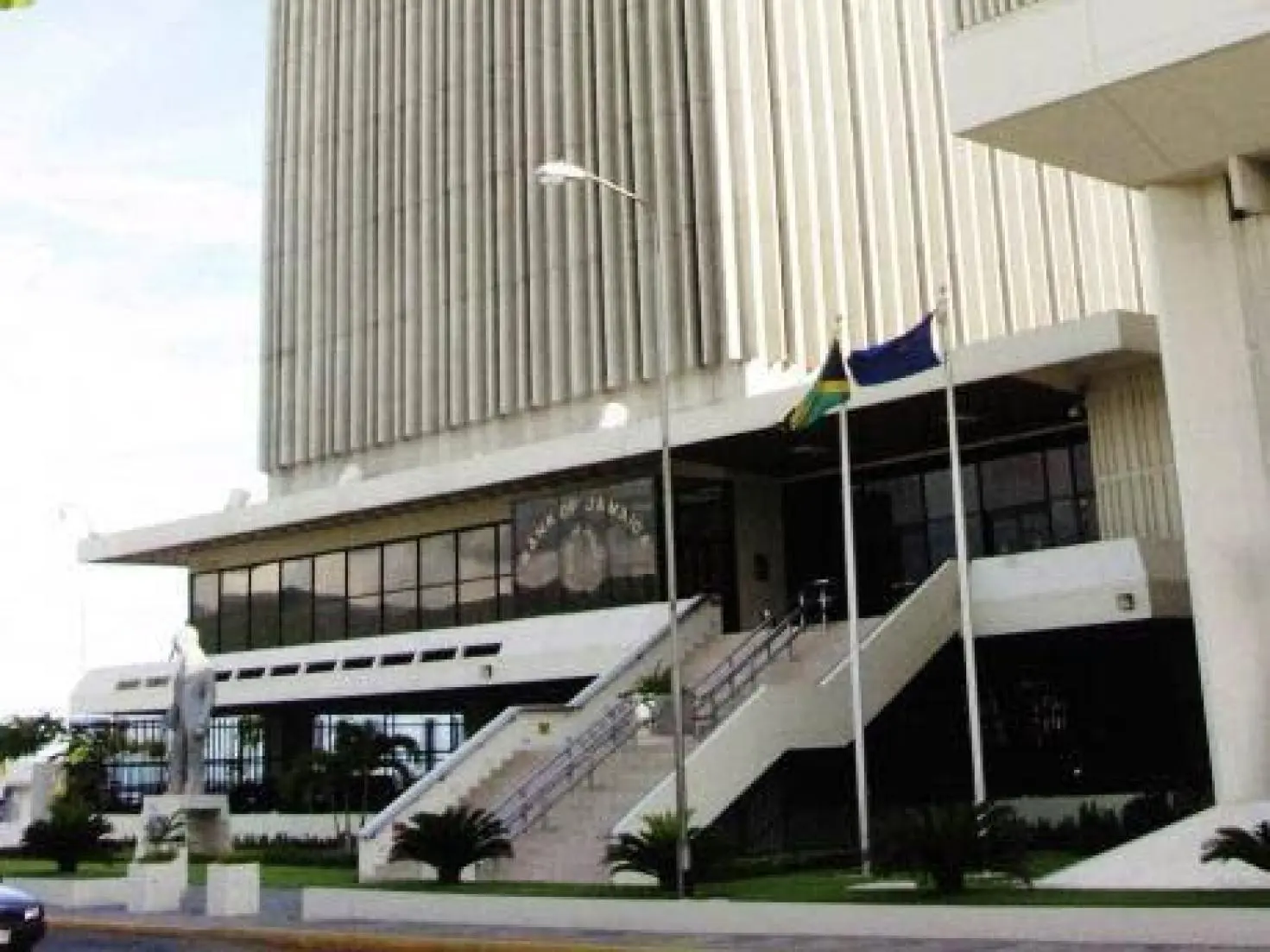
In the midst of the changing of the guard at the Bank of Jamaica (BOJ) and the reports on the performance of the local economy, something important happened recently in Jamaica’s bond market.
The government offered investors a 20-year Jamaican-dollar bond carrying an 11.25 per cent coupon. It sought J$5 billion. Investors submitted bids for only about J$3.5 billion. Ultimately, the government accepted approximately J$2.9 billion. In other words, even at 11.25 per cent, the issue was undersubscribed.

While one auction does not constitute a fiscal crisis, and Jamaica’s macroeconomic fundamentals remain substantially stronger than they were a decade ago, the signal should not be ignored. Indeed, the government’s own debt-management strategy indicates that undersubscription has occurred in several recent market offerings.
The local bond market, as is currently the case in the United States, may be telling policymakers that capital is becoming scarce and expensive, just when Jamaica needs considerably more of it.
This will complicate the choices facing policymakers. For this is happening at a time when Jamaica is simultaneously rebuilding after Hurricane Melissa; is experiencing weak economic activity; is confronting inflation above the central bank’s target; and is operating in an uncertain international environment of expensive long-term capital.
Indeed, recent estimates by the Planning Institute of Jamaica (PIOJ) indicated that real GDP for the April-June quarter was 2.9 per cent below its year-earlier level. Agriculture contracted 17 per cent, mining and quarrying almost 24 per cent, and accommodation and food services, about 12 per cent.
The July inflation rate was reported to be 7.5 per cent, compared with the BOJ’s 4–6 per cent target. Core inflation has also risen to 5.2 per cent. Jamaica therefore has the uncomfortable combination of weak production and elevated prices.
TEMPTATION
There is a temptation to frame the policy debate conventionally: should the government stimulate the economy, or should the BOJ tighten monetary policy to reduce inflation?
Neither answer is likely to be adequate.
Much of the present inflation originated in supply disturbances: higher energy and transportation costs, drought-related food shortages, hurricane damage, and imported inflation. But the country is also detecting some second-round effects as these increases migrate into processed foods, services and broader prices. The central bank must therefore prevent temporary inflation from becoming embedded in longer-term expectations.
In the short run, tackling inflation requires a supply-side response from trade and production-related ministries. This is where the undersubscribed bond becomes important.
If investors require increasingly high yields to absorb additional government debt, Jamaica could well recreate a problem it spent 15 years correcting: fiscal borrowing crowding out productive private investment. Jamaica’s fiscal reforms were designed partly to break precisely this cycle.
The post-2010 fiscal transformation helped reverse that dynamic. Lower public debt reduced the government’s appetite for domestic savings, helped lower interest rates, and created more space for businesses and households to borrow and invest. It would be a historical irony if reconstruction and external shocks now recreated the old pattern.
The government would be wary of simple solutions which call for progressively raising bond yields until every issue clears.
EXPENSIVE
At 11.25 per cent, long-term domestic borrowing is already expensive. Moving towards 12 or 13 per cent would increase future debt-service costs while establishing higher benchmarks throughout the financial system.
Yet, Jamaica cannot economise its way out of hurricane damage. The solution calls for greater selectivity in borrowing and investing. The first step is to change the composition of financing.
The government is planning to make greater strategic use of concessional and long-duration financing from the World Bank, Inter-American Development Bank (IDB), Caribbean Development Bank (CDB), and other development partners where the terms are substantially below Jamaica’s domestic marginal borrowing cost. Debt issuance must be more diversified across maturities and instruments rather than repeatedly asking domestic institutions to absorb large quantities of very long-duration paper.
Pension funds and insurance companies naturally require long-duration assets, but their capacity is not unlimited. At some point, portfolio concentration, liquidity requirements and alternative investment opportunities matter.
Also, the National Reconstruction and Resilience Authority (NaRRA) and other reconstruction projects should be ranked partly according to their capacity to expand future supply. An irrigation project that reduces food imports deserves priority. So does water infrastructure. Projects with high import content, weak productivity effects, and limited urgency should move down the queue.
Jamaica’s long-term challenge is not principally insufficient public spending, but insufficient productive investment. The country cannot sustainably achieve higher growth simply by moving resources between government and existing businesses. It needs to enlarge the pool of capital available for long-term investment.
If national savings flow disproportionately toward government securities, consumer borrowers, mortgages, real estate and established businesses while innovative firms, exporters, technology companies, agriculture and manufacturing struggle to obtain long-term capital, the problem is not simply the quantity of savings. It is partly the architecture of financial intermediation.
That deserves far more attention from the BOJ, the Ministry of Finance, the Development Bank of Jamaica (DBJ), policy institutions, and the private financial sector. The government must maintain fiscal credibility while rebuilding damaged infrastructure. BOJ must contain inflation expectations without treating every supply shock as excess demand. The financial system must channel more savings toward productive investment.
The undersubscribed 11.25 per cent bond should therefore not be interpreted as an isolated financial-market curiosity. It is an early warning. Jamaica is entering a period in which capital will have to be allocated much more intelligently, because it is no longer cheap