

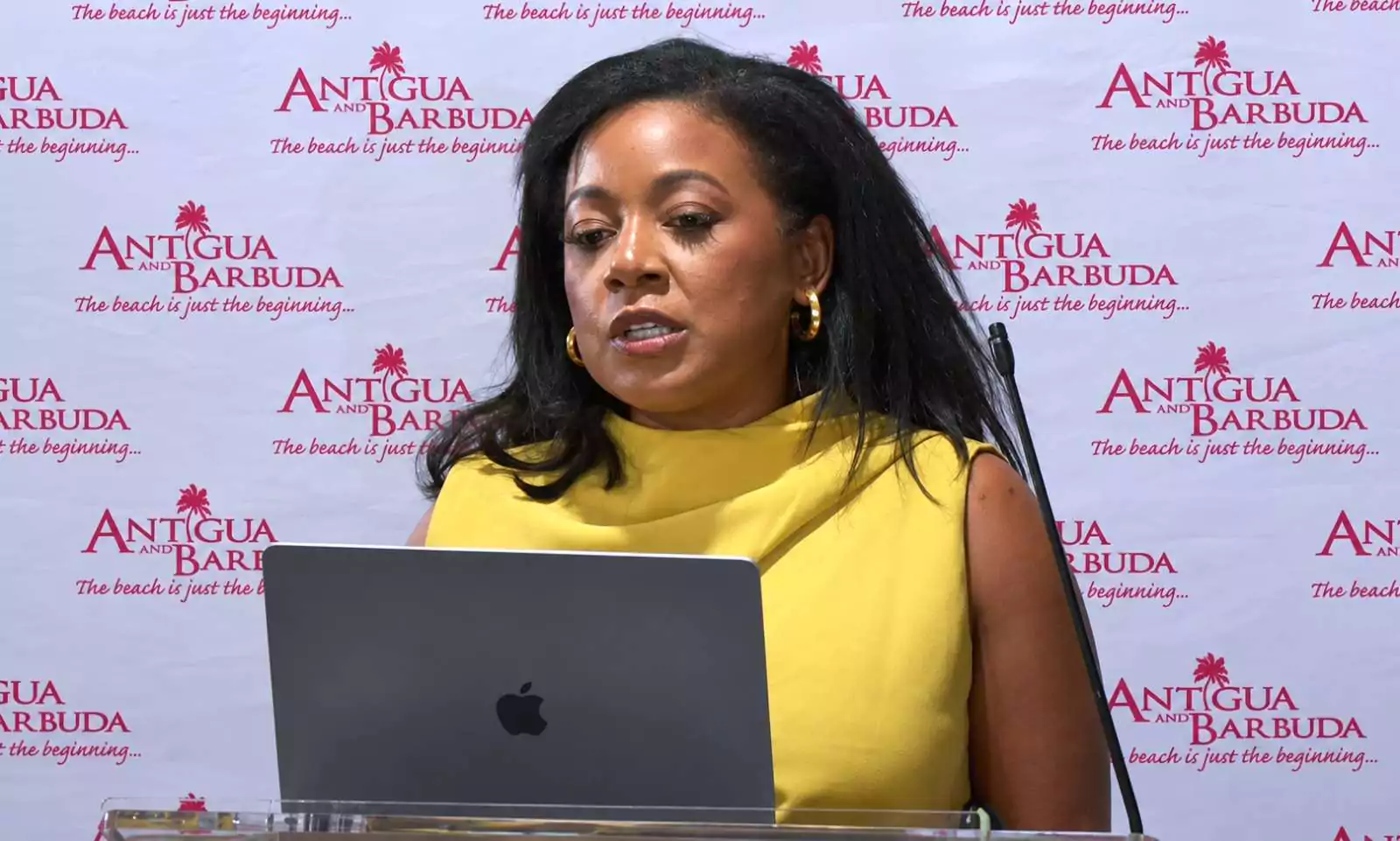
The Antigua and Barbuda Tourism Authority (ABTA) is being challenged to rethink how it markets the destination as changing consumer behaviour, economic pressures and new travel trends transform the global tourism industry.
Marketing strategist Charlotte Mair, founder and managing director of creative communications agency The Fitting Room, issued the call while addressing stakeholders at an ABTA strategy session aimed at developing a more innovative and future-focused marketing plan for Antigua and Barbuda.

Mair said the destination already possesses a strong tourism foundation but must now look beyond traditional images of beaches, restaurants and picturesque scenery to understand what motivates modern travellers.
“It’s not so much about, ‘Here’s a pretty beach, this is how many beaches we’ve got, and these are our restaurants,’” she said. “It’s why do you want to come to us, why do you want to stay with us, and why will you keep coming back to us?”
She told tourism stakeholders that travellers are increasingly seeking experiences that reflect their lifestyles, identities and personal interests. This, she argued, requires destinations to pay closer attention to changes in human behaviour, relationships, technology, culture and spending patterns.
Among the significant trends highlighted was the rapid growth of solo female travel and group holidays involving women with disposable income.
Mair recalled travelling to Thailand for a Muay Thai training camp with 35 women from around the world, describing the experience as an example of how the traditional travel market is evolving.
“These were 35 women who travelled alone, had a level of disposable income and then went off and travelled through Thailand individually,” she explained.
She said Antigua and Barbuda has an opportunity to develop experiences and campaigns targeting this expanding segment, including professional women, solo travellers and groups seeking personalised holidays rather than conventional couple-based packages.
Mair also urged the ABTA to focus on gaining the trust of consumers within private digital communities, including WhatsApp groups, where travel recommendations are increasingly shared among friends and relatives.
She said these personal endorsements are becoming more influential as public trust in major technology platforms and traditional advertising declines.
“That’s the kind of unseen co-sign that every brand needs at the moment,” Mair said. “As big technology and innovation get bigger, our trust gets smaller.”
Social media platforms such as TikTok and Instagram are also playing a decisive role in travel planning, particularly among younger consumers.
Mair said she planned an earlier trip to Sri Lanka largely through recommendations found on TikTok before using Instagram to assess the destinations and businesses she was considering.
She explained that travellers increasingly trust the experiences and opinions of people within their age group and social networks instead of relying exclusively on information published by tourism boards.
“You have to think about the channels, what they are doing and what they represent,” she said. “It is very easy to put up an Instagram picture or a TikTok and hope it goes viral. The strategy and the things underpinning it are what will change the trajectory for any destination.”
The marketing strategist recommended that the ABTA adopt an “80-20” approach, devoting most of its efforts to retaining established visitors while using a portion of its resources to test new markets, platforms and tourism experiences.
She contrasted the travel habits of her 88-year-old grandmother, who represents a loyal returning visitor, with those of her 26-year-old sister, who consumes content through platforms such as Snapchat and Substack.
Mair said both audiences are valuable but require entirely different marketing approaches.
She also warned that inflation and the gradual erosion of the middle class could affect demand for premium and luxury travel. Destinations, she said, must identify how consumers’ priorities and spending habits are changing and determine where emerging visitor markets can be found.
The strategy session is expected to examine how Antigua and Barbuda can respond to these global shifts while strengthening its position as a competitive Caribbean destination.
Mair said the discussions would deliberately challenge stakeholders, encourage curiosity and produce a strategy capable of disrupting the tourism marketplace.
“We’re going to be here to make you a little uncomfortable, drive some curiosity and ask some harder questions,” she said, “but also push for a strategy that is genuinely disruptive for your space while recognising what you have already done so brilliantly.”