

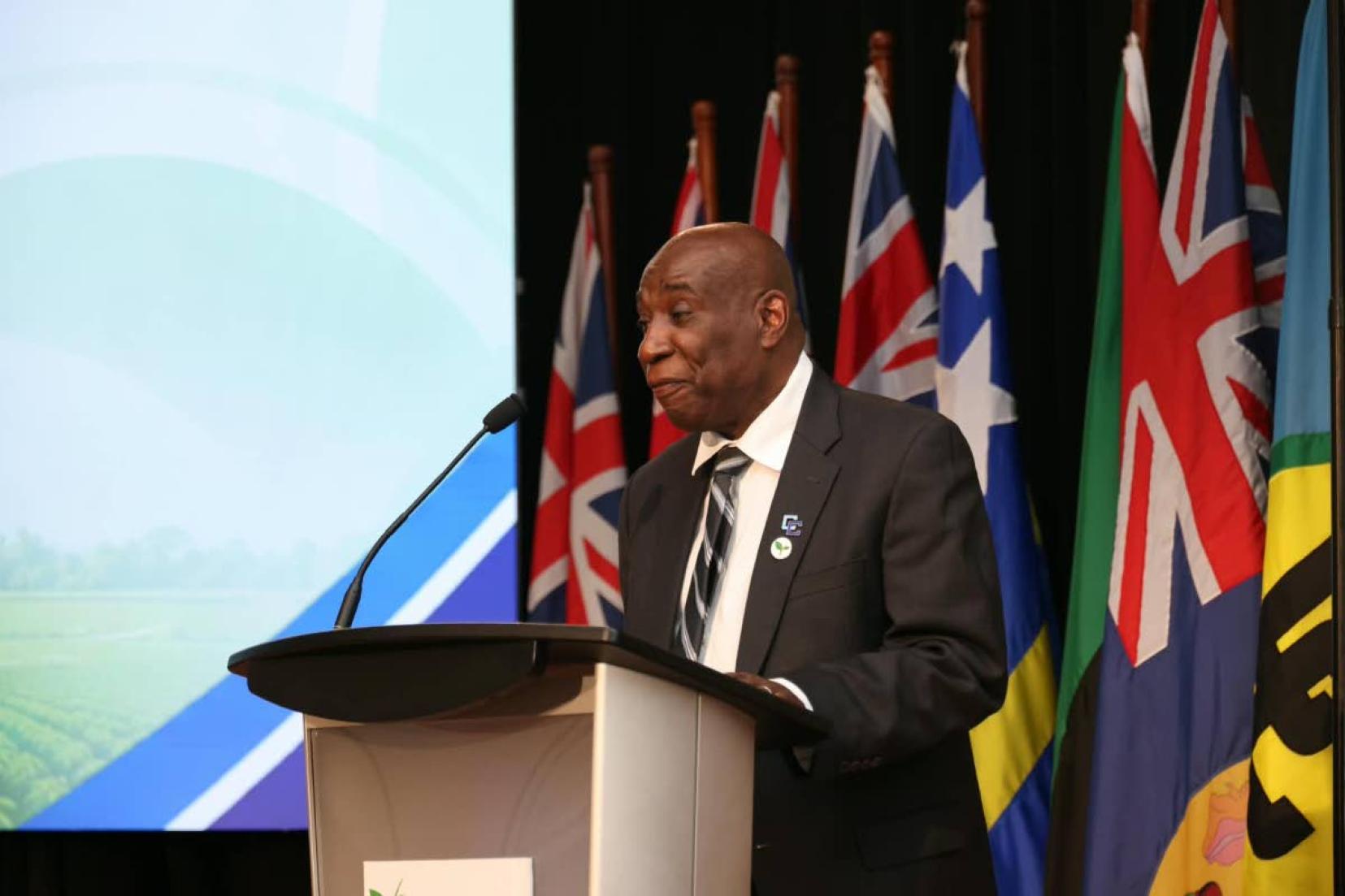
With the Caribbean importing more than half of its food, CARICOM Assistant Secretary General Dr Wendell Samuel says the situation poses a major threat to the region’s economic resilience.
“For a region where more than 60 per cent of the food consumed is imported, and where some member states import up to 80 per cent of their food, the imperative for action became undeniable,” Samuel said, while addressing the opening ceremony of Caribbean Week of Agriculture 2026 in Trelawny on Sunday.

Samuel said the COVID-19 pandemic had exposed the vulnerabilities of the region’s food systems, noting that the Caribbean’s food import bill between 2018 and 2020 reached approximately US$13.7 billion, equivalent to about 15 per cent of regional gross domestic product.
“This represents a significant drain on our foreign exchange and on our economic resilience,” he noted, while reminding agriculture ministers and other delegates that the global coronavirus disrupted supply chain. “Supply chain disruptions reminded us that food security cannot be outsourced. No, sah!”
Against that background, he said CARICOM’s Vision 25 by 25 initiative, which is aimed at reducing the region’s food-import bill by 25 per cent, had moved beyond aspiration and is now at a measurable level.
Samuel said regional food production increased by approximately 24 per cent between 2022 and 2024, while investment expanded in agricultural infrastructure, farm-to-market roads, cold storage, processing facilities, renewable energy, digital agriculture, and climate-smart technologies, and that private-sector financing and investment in agriculture have also grown, signalling increased confidence in the sector.
CARICOM heads of government agreed in 2025 to extend the initiative to 2030 through the Vision 25 by 25 Plus Five plan.
“This next phase moves beyond reducing imports and focuses on building a modern, resilient, technologically enabled food system capable of enhancing production, expanding regional trade, attracting new investment, creating jobs, and improving nutrition outcomes for Caribbean people,” he said.
Samuel added that the region must also improve agricultural health and food-safety systems, expand agricultural insurance and financing opportunities, and remove barriers to intra-regional trade, arguing that the transformation of Caribbean agriculture cannot be left to governments alone.
“Farmers, fishers, processors, private sector, financiers, researchers, educators, development partners, and consumers all have a role to play in creating a stronger regional food economy,” he said.
Samuel also highlighted the growing participation of young people in agriculture, describing their energy, innovation and entrepreneurial spirit as critical to the next phase of the regional food-security push.