

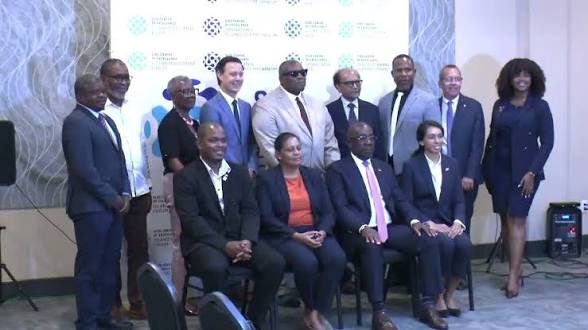
Antigua and Barbuda has marked an important milestone in international development cooperation with the official opening of the Small Island Developing States Centre of Excellence. The institution is intended to help small island nations address their shared development challenges through research, investment, partnerships and innovative solutions.
The Centre officially opened during a ceremony on Thursday, October 22, at St. James’s Club & Villas in Mamora Bay, Antigua. The event followed an inaugural meeting of its Board, establishing an institutional foundation for the Centre’s future work.

The initiative emerged from the Fourth International Conference on Small Island Developing States, held in Antigua and Barbuda in 2024. That conference produced the Antigua and Barbuda Agenda for SIDS, a ten-year framework designed to advance the development priorities of small island states between 2024 and 2034.
Small island developing states face a range of interconnected challenges, including vulnerability to climate change, limited access to financing, economic shocks and the high cost of building resilient infrastructure. The new Centre is intended to help countries obtain reliable information, attract investment and develop practical responses to these difficulties.
During the opening ceremony, Ambassador Walton Aubrey Webson, Interim Director of the Centre, highlighted the importance of monitoring progress and ensuring that commitments made by governments translate into measurable development results.
Ambassador Ilana Seid, Chair of the Centre’s Board, emphasised that establishing the institution was only the beginning. She called for sustained investment and support from development partners so the Centre could deliver tangible benefits to island communities.
United Nations representatives also reaffirmed their support for the initiative, recognising its potential contribution to the Sustainable Development Goals.
The opening gives Antigua and Barbuda an opportunity to strengthen its role in international discussions concerning the future of small island nations. The Centre’s long-term success, however, will depend on its ability to turn its mandate into practical programmes, meaningful partnerships and measurable improvements in the lives of people across the SIDS commu