

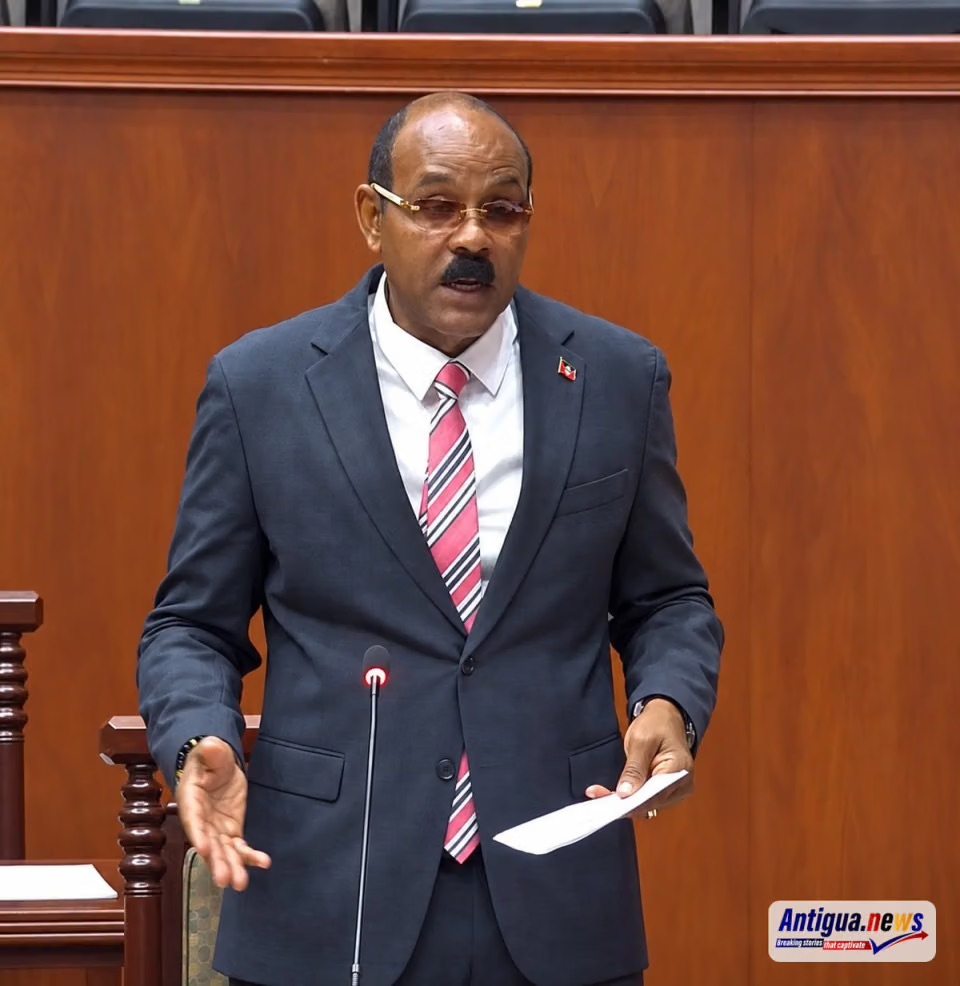
Prime Minister Gaston Browne has delivered a stern warning to gas station operators amid the ongoing fuel dispute, declaring that no individual or business group should place its financial interests above the welfare of Antigua and Barbuda.
His remarks, published in two statements on Facebook, come against the backdrop of renewed industrial action by gas station operators demanding increased profit margins, a dispute that has triggered widespread disruption, lengthy queues and growing frustration among motorists.

The latest protest, the second in recent weeks, saw several privately operated gas stations suspend fuel sales, forcing motorists to seek supplies at West Indies Oil Company (WIOC) stations.
The situation intensified on Wednesday as hundreds of vehicles lined up at fuel pumps, with traffic stretching for miles in some areas. Some residents resorted to walking to gas stations carrying fuel containers, while reports indicated that several WIOC locations had exhausted their supplies, leaving the Friars Hill station as one of the remaining options for desperate motorists.
Against this backdrop, Browne used his social media platform to emphasise the importance of protecting consumers from further financial pressure, particularly during a period of global economic uncertainty.
“During a period of global shocks, domestic stability, including price stability must be maintained at all costs, in the public interest. No person, or group of persons should seek to elevate their personal interest above the national interest,” the Prime Minister stated.
His comments appear to be directed at the ongoing demands for increased margins, as operators continue to argue for improved financial returns from the sale of gasoline and diesel.
In a separate Facebook statement, Browne questioned the business logic of seeking higher margins at the potential expense of customer loyalty and sales volumes.
“Increased margins, with less customers, less volume of sales is selfdefeating. Preserving customer base and increasing sales are quintessential to business success. Never mistake the trees for the forest,” he wrote.
The remarks suggest that the Prime Minister believes the operators’ approach could ultimately undermine their own businesses, particularly if repeated closures drive customers toward alternative fuel suppliers.
However, the operators have maintained that their demands are not simply about increasing profits but about keeping their businesses financially viable as operating expenses continue to rise.
In an open letter to Browne on Wednesday, the dealers claimed that their effective margin had fallen to 6.38 per cent, with operators receiving EC$1.08 per gallon of gasoline and 95 cents per gallon of diesel.
They also accused the government of failing to establish a promised review committee following discussions in September, insisting that their concerns have gone unresolved for far too long.
The Prime Minister had previously acknowledged that the operators’ concerns were not unreasonable, while Cabinet announced plans to examine possible adjustments to dealer margins and the impact of banking fees, labour costs and other expenses.
Browne has also announced plans for WIOC to expand its retail operations through additional fuel storage facilities and pumps, a move he said would help prevent future disruptions caused by widespread station closures.
The dispute comes at a particularly difficult time for consumers, with gasoline now costing EC$17.99 per gallon following two increases since September.
With operators demanding financial relief and the government emphasising consumer protection, the latest exchange highlights the widening divide between both sides.
For motorists already struggling with higher fuel costs and repeated interruptions to supply, the immediate concern remains whether the dispute can be resolved without another round of closures.