

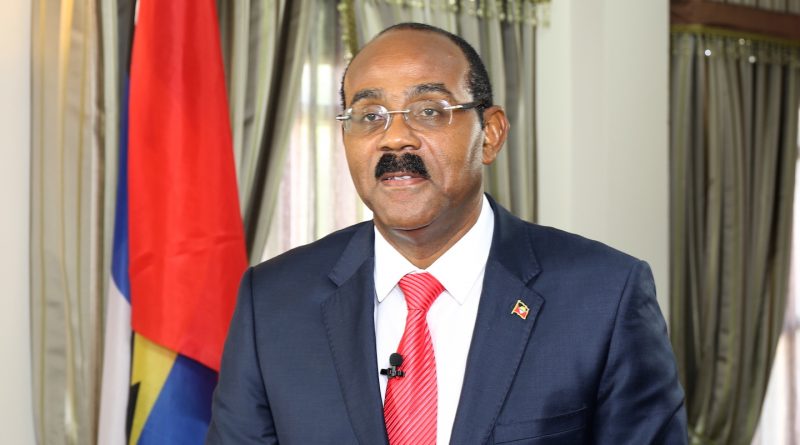
Prime Minister Gaston Browne says the minister responsible for the Antigua Public Utilities Authority (APUA), Melford Nicholas, along with the authority’s management, will be held accountable for ongoing water distribution failures, even as the government insists that water production has now reached a level sufficient to meet domestic demand.
Speaking during a radio interview following the commissioning of a second reverse osmosis plant under the APUA and Seven Seas Water Group partnership, PM Browne said the focus must now shift from water production to effective distribution. The newly commissioned plant adds approximately two million gallons per day to the national supply.

“Blaze me, blaze the minister, but blaze the minister more,” Browne said, arguing that public pressure is part of accountability when service delivery falls short.
Browne acknowledged that resolving Antigua and Barbuda’s long-standing water problems has taken longer than expected, describing the investment as capital-intensive and costing hundreds of millions of dollars.
The Prime Minister pointed to management failures within APUA, saying delays in responding to broken pipes have, at times, left communities without water for days. He said such prolonged outages are unacceptable and should not continue.
The Prime Minister said both Minister Nicholas and APUA’s senior management will be held responsible for ensuring improvements, and he urged the public to continue raising complaints when service failures occur.
“It’s one thing to boast and say we have eleven or twelve million gallons of water… but if we don’t manage distribution effectively, we’re going to frustrate the people,” the Prime Minister said.
PM Browne said changes have already been made within APUA to improve productivity, but argued that stronger oversight is now required. He said Minister Nicholas will be expected to provide more “granular” updates to Cabinet on water distribution issues, as the government adopts a more hands-on approach.
Water access has been one of Antigua and Barbuda’s most persistent infrastructure challenges and became a central political issue in the last general election campaign, where it was frequently cited as a symbol of public frustration and was even used as a campaign slogan by the main opposition party. Chronic shortages, rationing, and inconsistent supply across communities had for years defined public dissatisfaction with basic services.