

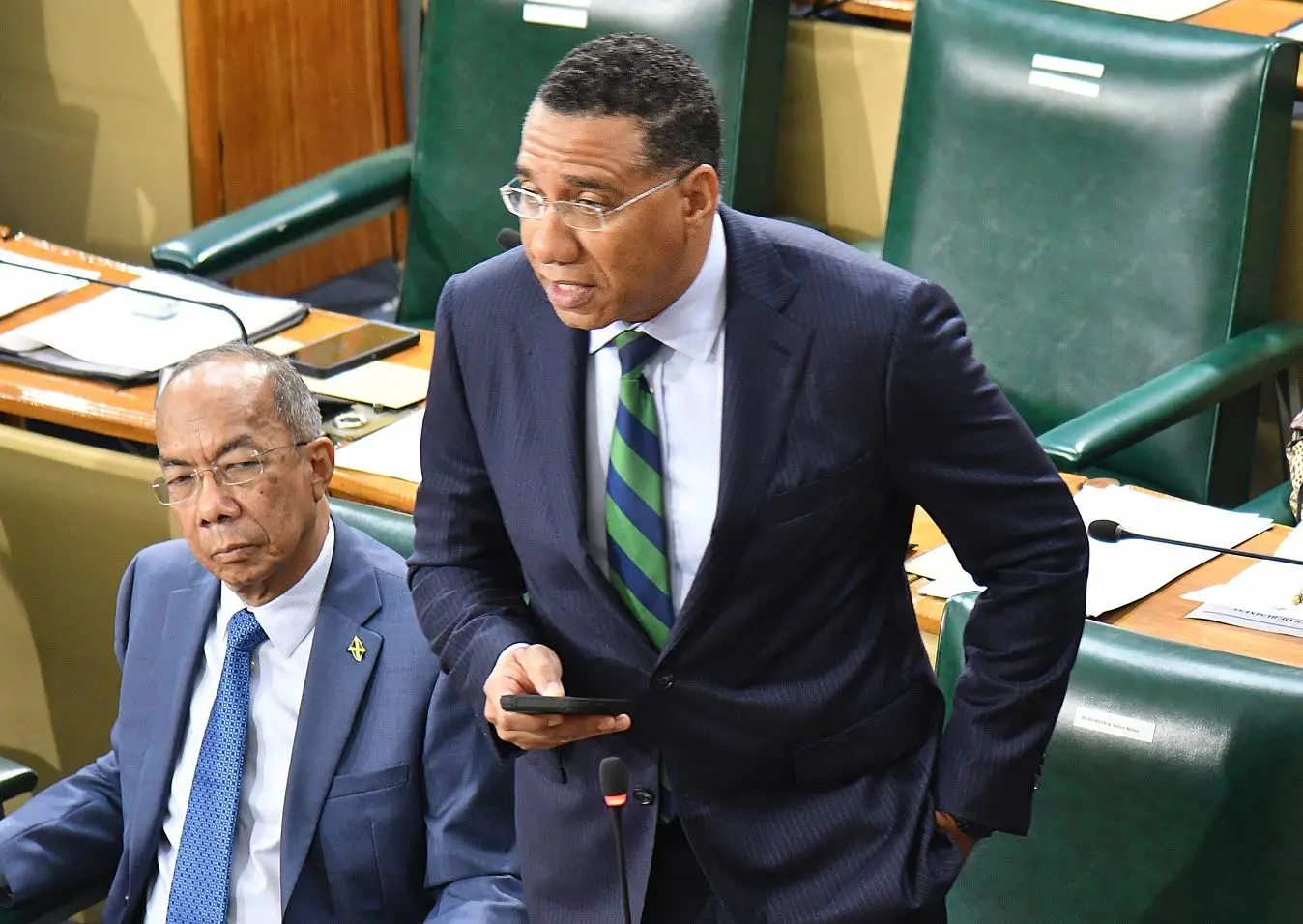
Prime Minister Dr Andrew Holness has announced that $10 million will be allocated to each of the island’s 63 constituencies to kick-start the national clean-up exercise post-Hurricane Melissa.
He said $150,000 will also be allocated to each councillor in each constituency.

A breakdown of the $10 million will see $2 million going towards drain and waterway cleaning and vector control, which is aimed at reducing the spread of pests and disease; $5 million for debushing; and $3 million for debris and waste removal.
“Beyond these parishes, other severely affected communities islandwide will also be targeted,” Holness said, while noting that the Government was targeting the resources to the areas of greatest need.
“This is part of a wider effort to formalise labour, strengthen social protection, and uphold decent work principles even during an emergency,” he stated.
The National Solid Waste Management Authority (NSWMA) will coordinate operational planning and work schedules. It will be supported by the Jamaica Defence Force; the National Spatial Data Unit, utilising GIS mapping to tag and track debris; Ministry of Local Government and Rural Development; and the Ministry of Industry, Investment and Commerce.
Holness said the NSWMA is in the process of identifying temporary disposal sites and exploring recycling, management of scrap metal, among other methods of overall waste management.
Already, efforts are underway to procure additional trucks, compacters, and heavy equipment. Holness also pointed to Japan and the United States as countries which, following major disasters, have resorted to waste-to-income solutions.
Meanwhile, he pointed to figures presented by the United Nations Development Programme (UNDP), which estimate that the rampaging Category 5 hurricane, which struck Jamaica’s south-western belt on October 28, left behind 4.8 million tonnes of debris. This, UNDP said, is equivalent to 480,000 standard truckloads.
Urging Jamaicans to take part in the clean-up of their communities, Holness said, “Every Jamaican school, businesses, community groups, church groups, service clubs, and private households must join in this campaign to clean up our space. A cleaner Jamaica is not only aesthetically pleasing, it is safer, healthier, more resilient, and more attractive for investment and tourism. The clean-up we begin today contributes directly to our economic recovery, our public health, and our national pride.”
Added Holness: “This debris is blocking roads, hindering access to schools and hospitals, farms and markets, slowing relief distribution, and delaying the restoration of essential services.”
The initial operations are slated to take place over two months, after which there could be extensions.