

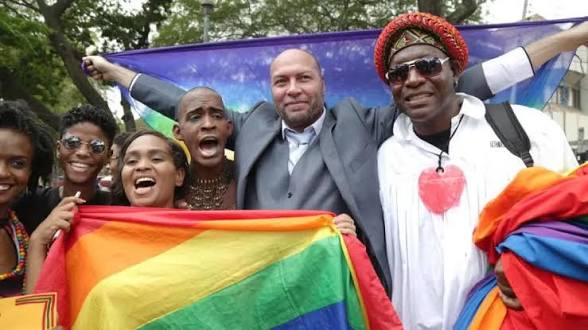

Trinidad and Tobago has recorded a significant legal development after the United Kingdom-based Judicial Committee of the Privy Council overturned laws criminalising consensual same-sex relations between adults.
The unanimous decision, delivered on Tuesday, November 10, brings an end to a nearly decade-long legal battle brought by LGBTQ+ rights activist Jason Jones.

Jones launched his challenge in February 2017, arguing that provisions of Trinidad and Tobago’s Sexual Offences Act violated his constitutional rights, particularly his right to privacy and family life.
The legislation contained provisions that criminalised certain consensual sexual activities between adults of the same sex, carrying potential prison sentences of up to five years.
Although the laws had not been enforced in recent years, advocates argued that their continued existence encouraged discrimination and reinforced stigma against LGBTQ+ individuals.

In its ruling, the Privy Council determined that the provisions could not be justified in a society that respects individual rights and freedoms.
The decision followed several years of legal proceedings. Trinidad and Tobago’s High Court initially ruled against the provisions in 2018, but a local appeals court partially reversed that decision in March 2025.
Jones subsequently pursued the matter before the Privy Council, which serves as Trinidad and Tobago’s final court of appeal.
Following the latest ruling, Jones described the outcome as a major victory, expressing hope that it would contribute to broader improvements in equality and human rights across the country.
The judgment could also have implications for other Caribbean territories where similar colonial-era provisions remain in legislation, including Jamaica, Grenada and St. Vincent and the Grenadines.
Several Caribbean countries, including Antigua and Barbuda, Barbados, Dominica and Saint Lucia, have already seen similar laws overturned or invalidated.
The decision represents a significant development in the Caribbean’s ongoing discussions surrounding constitutional rights, equality and the legacy of colonial legislation.