

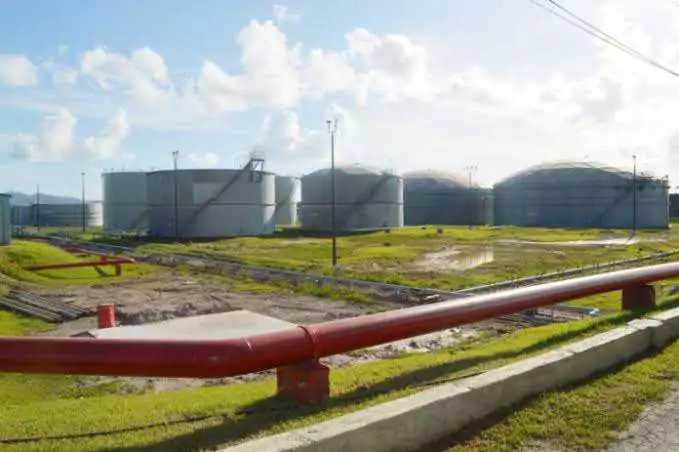
Antigua and Barbuda could benefit from increased oil production in Venezuela if sanctions and other restrictions on the South American country’s petroleum industry are eased.
West Indies Oil Company Chief Executive Officer Gregory Georges said expanding production in Venezuela could create new opportunities for WIOC and strengthen regional energy security.

WIOC has not imported petroleum products from Venezuela since 2018. Its current supplies are sourced through a United States-based supplier and lifted from the U.S. Gulf.
However, Georges believes Venezuela could eventually emerge as another viable source of petroleum products for Antigua and Barbuda.
“The outlook, in terms of generating petroleum products in the region, looks good, and we’re nearby,” Georges said. “We like to think that we can find a way that we can be the beneficiaries of some of this.”
His comments come amid growing U.S. involvement in Venezuela’s oil industry.
On August 31, the U.S. government announced an agreement granting a U.S.-led private company long-term concessions covering 17 Venezuelan oil fields, reportedly containing about 65 billion barrels of proven reserves.
Chevron also announced new agreements with Venezuela on September 2 to support increased investment and production. The company reportedly plans to invest more than US$7 billion over five years, potentially increasing production from its Venezuelan operations to approximately 600,000 barrels per day.
The developments are particularly relevant to WIOC because Venezuela’s state-owned oil company, PDVSA, holds a 25 per cent stake in the company.
“If the Americans and the Venezuelans can work something out, ultimately we could be the beneficiaries of it,” Georges said.
He also highlighted Guyana’s rapidly expanding petroleum sector as another potential source of opportunity for the Caribbean.
Additional offshore developments are expected to increase Guyana’s production capacity, with ExxonMobil’s fifth floating production, storage and offloading vessel reportedly expected to begin operating during the final quarter of 2026.
Georges said the continued growth of the oil industries in Venezuela and Guyana could create a more favourable regional supply environment for WIOC.
Antigua and Barbuda currently depends heavily on imported petroleum products, leaving the country exposed to international price movements, geopolitical developments and potential supply-chain disruptions.
WIOC uses contractual arrangements to help secure a reliable fuel supply for the small Caribbean market, but Georges acknowledged that the supply chain remains vulnerable to major global events.
This article is based on reporting by Island Press Box.