

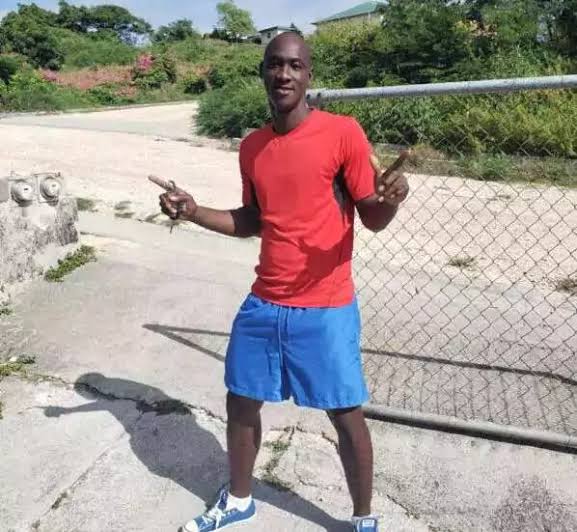
For years, court orders directing that Rashawn Shabazz be housed at Clarevue Psychiatric Hospital rather than behind prison walls, were not enforced … a failure his father says finally cost his son’s life.
Khalid Shabazz, father of the man who died days before his 36th birthday on July 27th, following an incident at His Majesty’s Prison on July 23rd, says the system meant to protect his son from himself failed him repeatedly over more than a decade, despite formal legal directives ordering his transfer to a mental health facility.

Speaking on Observer AM, Shabazz said his son had lived with mental illness for more than 15 years, and that he had secured court orders — including one from the late Magistrate Conliffe Clarke and another from Magistrate Dexter Wason — mandating that his son be housed at Clarevue instead of the prison. He said those orders were never carried out.
“They’ve neglected the order saying that he’s aggressive and so on and so forth,” Shabazz said. “All mental patients have a certain level of aggression depending on their mental condition. He’s no less the same, but somebody doesn’t want to do their job. Somebody is failing to do their job.”
Shabazz said his son was never sentenced for a crime tied to the recent incident but was being held at the prison “for keeping” because of his mental health condition, a distinction he says has been lost in public reporting.
He also alleged this was not an isolated failure, but part of a wider pattern in which the state routinely houses people with mental illness in the prison system instead of appropriate psychiatric care.
“I’m understanding there are other prisoners or other individuals at Her Majesty’s Prison with mental issues that they would decide to house them at Her Majesty’s Prison rather than housing them at the proper facility,” he said. “We have not invested properly in the development of human resources as it relates to taking care of our mental health patients. We’re failing miserably as it relates to that.”
Shabazz said the problem extends beyond facilities to a lack of trained personnel equipped to de-escalate situations involving people in mental health crisis, whether they are prison officers or police.
“I don’t think it’s just a matter of facility. Facility is good. Of course, with the facility, hopefully we’ll have better training of not only the police, if the police are involved in handling these matters, but the facility,” he said.
He said families without wealth or political influence often struggle to get help for relatives with mental illness, describing a system that responds selectively depending on who is asking.
“It seems like it’s very, very difficult to be able to have your family members get assistance from the state,” he said. “A lot of them are left, and these could be very productive people in our society… but a lot of times we just don’t see them as [important], if it is that it’s not somebody in political power, somebody of renown.”
Police say Shabazz became aggressive and barricaded himself in his cell on July 23rd after officers tried to escort him to a scheduled medical assessment, and that non-lethal measures were used to remove him after attempts to peacefully resolve the situation failed. He was transported to the Sir Lester Bird Medical Centre and pronounced dead at approximately 11:37 a.m.
Shabazz disputed the suggestion that his son died after arriving at the hospital, saying he was told by medical personnel that his son’s heart had already stopped before he got there.
“I was informed by the doctor that dealt with the matter that his heart had stopped beating before they got there,” he said. “I like to dispel the fact that he wasn’t unalived at the hospital. That happened prior to the hospital.”
Shabazz said he is now calling for a full autopsy and answers from the authorities, and pushed back against what he described as a pattern of public attention fading quickly after incidents involving people in state custody.
“There should be an autopsy done to see exactly what caused my son’s demise,” he said. “The family needs answers. I think the public needs answers. Too often around here, we have something that talks about for nine days, five days or whatever, and then we sweep it under the carpet and we don’t hear about it anymore. I would dare say that this is not going to be one of them.”
Police have said a full inquiry into the incident is underway and have extended condolences to the Shabazz family.