

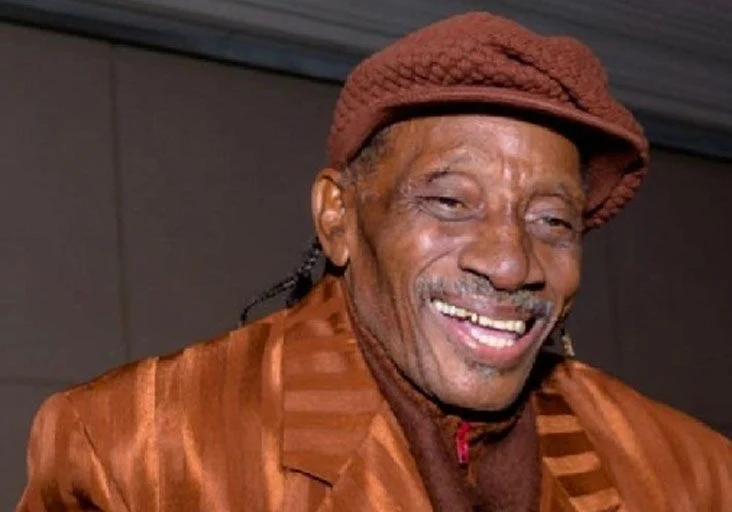
The recent announcement regarding the legendary Baron (Timothy Watkins) serves as a jarring reminder that for many of our artisans, the transition from the spotlight to the twilight of life is fraught with vulnerability.
For decades, the National Carnival Commission (NCC) has operated primarily as a production house—a body designed to “set the stage” for a seasonal explosion of creativity. However, Minister of Culture Michelle Benjamin, speaking at a recent United National Congress (UNC) press conference at the party’s Chaguanas headquarters, signaled a radical departure from this limited mandate.

The Minister’s argument is that the NCC must evolve. It is no longer enough to provide a platform for a three-minute performance; the institution must assume responsibility for the holistic welfare of the performers.
The immediacy of the crisis was met with a $50,000 cheque presented to Baron’s wife, Sherma. As a policy analyst, it is critical to note that this was not a random act of ministerial largesse. Minister Benjamin highlighted that this aid followed a formal investigation conducted by her office and her “mediation department.”
The funds are earmarked for the granular realities of long-term care: medical bills, medication, and the general “upkeep” required in a professional care home. There is a profound indignity in seeing a national treasure removed from the public eye and placed in a facility due to financial and health constraints—this grant is a temporary bridge over that dignity gap.
While the $50,000 grant addresses the immediate medical bills, the broader policy debate within the Ministry is focused on sustainability. We are currently seeing a tug-of-war between two models:
• The Grant Model: A reactive, ad-hoc system that requires individual ministerial intervention and “investigation.”
• The Insurance Model: A proactive, structured policy that would provide automatic coverage for artists and members of the Trinidad and Tobago Unified Calypsonians’ Organisation (TUCO).
Minister Benjamin noted that she “can’t instruct the members of TUCO,” highlighting the friction of a Ministry attempting to implement social policy for a private organization. If the State is to fund these protections, it will likely require a restructured relationship between the NCC board, the Ministry, and TUCO—one where financial support is tied to institutionalized welfare structures rather than occasional grants.