

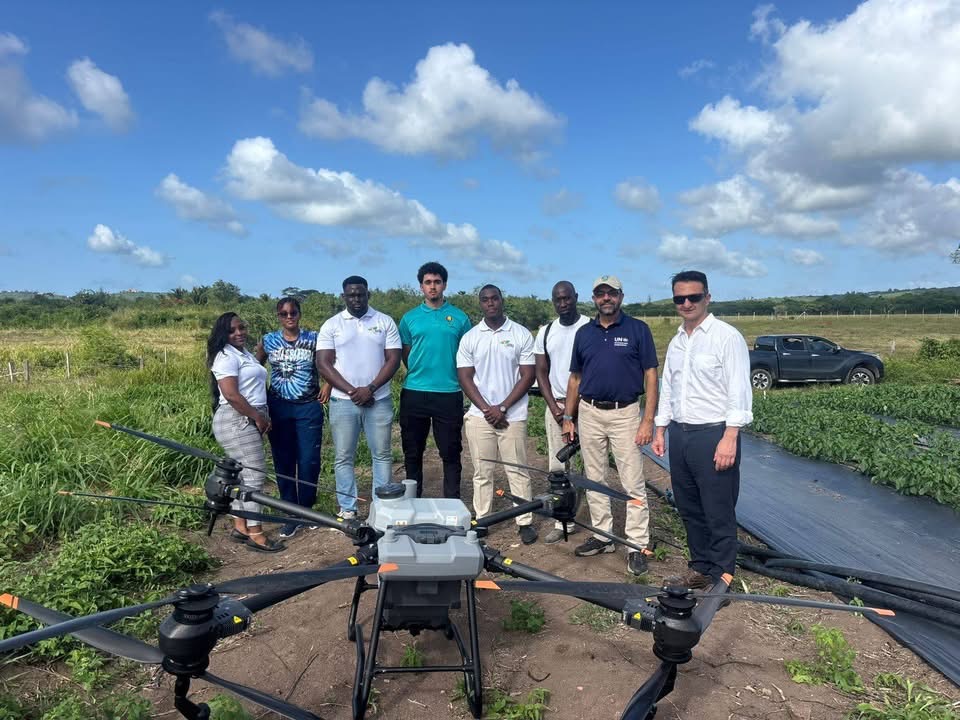
The Department of Environment (DOE) and the Sustainable Island Resource Framework (SIRF) Fund are advancing climate-resilient agriculture through the introduction of cutting-edge drone technology, thanks to support from the Global Environment Facility (GEF)-funded PATH to 2020 Project.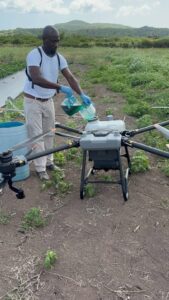
As part of the Pilot Blended Finance Programme for Farmers, the DOE and SIRF Fund have deployed DJI Agras T40 agricultural drones to support local farms—including Simmons Pepper Farm and the Rastafari Food for Life Community. These high-efficiency drones are designed to optimize crop spraying and monitoring, helping farmers manage resources more sustainably in the face of climate challenges.

In a recent field visit to Antigua and Barbuda, representatives from GEF and the United Nations Environment Programme (UNEP) joined DOE and SIRF Fund staff to witness the drone technology in action at Simmons Pepper Farm. The delegation commended Antigua and Barbuda for its forward-thinking, community-driven model of climate adaptation and agricultural innovation.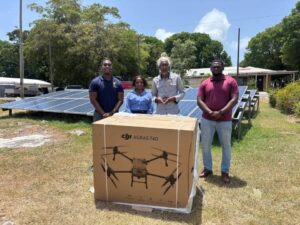
This initiative is part of a broader blended finance strategy led by the DOE and SIRF Fund, which leverages concessional funding and technical expertise to empower farmers with tools and technologies that are often beyond their financial reach.
The DOE and SIRF Fund express their deep appreciation to GEF, UNEP, technical partners, and especially to the local farming communities whose dedication continues to move Antigua and Barbuda toward a more sustainable, resilient, and food-secure future.